Arizona Know-How
Twelve years in business and experience with Arizona hard water inform the crew’s approach. They know mineral buildup can affect regulators, filters, and booster pumps, and check the system before recommending a fix.
Along the Colorado River, a drop in water pressure can affect daily use at a home or riverside vacation property, not just one faucet. Our team traces the source before recommending a repair.
Weak water pressure throughout the house can make showers and laundry take longer. For Mohave Valley properties using well water, we check the supply and pressure equipment to distinguish a well-side issue from a restriction inside the home. A safe first check: see whether more than one fixture is affected, then note which ones.
Mohave Valley Community Park is a familiar local reference point for our Mohave Valley service calls. Hot desert summers and large daily temperature swings make it useful to tell us whether pressure changed gradually or dropped suddenly; that timing helps our crew plan the diagnosis.
We serve Mohave Valley, including ZIP code 86440.
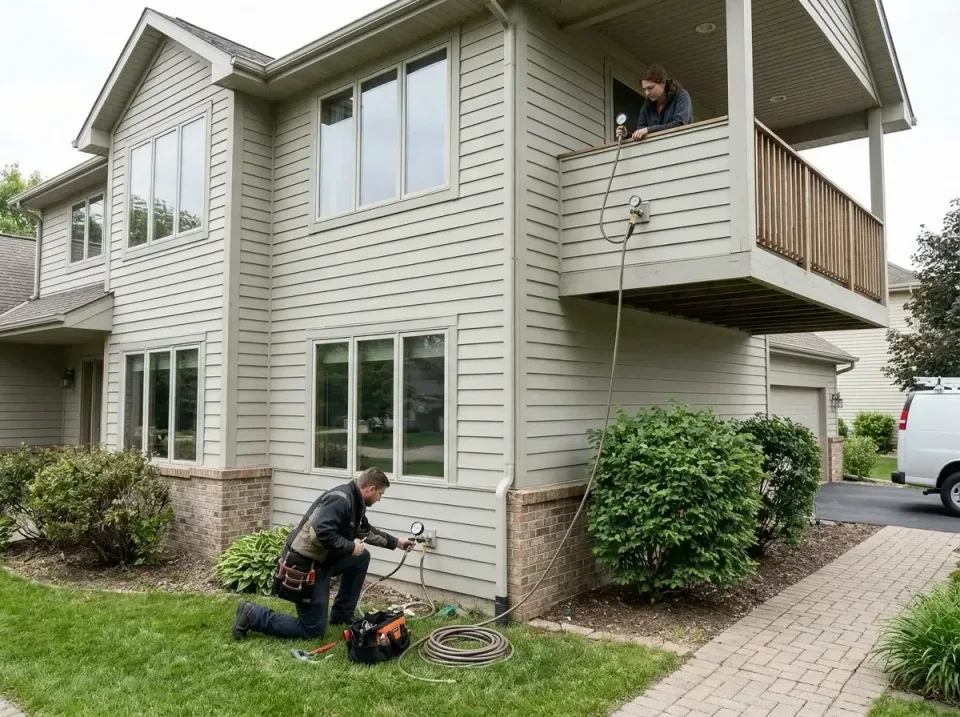
Mohave Valley’s mild dry winters and summer monsoon storms bring different conditions around homes near the Colorado River. If pressure changes after a storm or during a dry spell, tell our crew what changed and which fixtures are affected; that history helps focus the inspection.
We measure before repairing, explain the findings plainly, and confirm the work scope with you. A pressure regulator lowers incoming pressure, so a regulator problem can affect flow at multiple fixtures; our team checks its operation before proposing a repair.
For a property with a well, we can assess the pressure tank and related controls rather than guessing from faucet flow alone. Call (877) 773-0781 to schedule service in Mohave Valley.
When several fixtures in a Mohave Valley home run weakly, start by checking whether the problem affects both hot and cold taps. Our house water pressure diagnosis compares the pattern across fixtures before we open plumbing or recommend parts.
A pressure drop is a loss across a pipe or component; a restriction can therefore leave one faucet weak while others work normally. Our crew checks the supply and accessible plumbing, then explains whether the next step is water distribution repair or another targeted fix.
To check water pressure at home without special equipment, compare two faucets one at a time and note whether the flow changes when another tap runs. Do not dismantle a valve.
We schedule low pressure plumbing service for properties in Mohave Valley ZIP code 86440.
Low desert humidity increases evaporation and water demand, a useful part of the picture for Mohave Valley households noticing changing water use alongside weak flow. Demand alone does not prove a plumbing fault, so our crew tests the system rather than assuming the cause.
A water pressure gauge test at an accessible connection gives our team a clearer reading than judging flow by sight. At a home near Mohave Valley Public Library, we can also compare readings with the reported symptoms and inspect accessible equipment; the landmark helps identify the local service area, not the cause of a pressure problem.
If you think water pressure is too high as well as inconsistent, mention that before work begins. Our crew checks the conditions on site and explains the repair options. Call when the pressure change persists.
For a Mohave Valley pump job, the work scope determines which code and permit checks apply; Phoenix permit rules should not be assumed to govern a Mohave Valley property. Skipping a required inspection can leave concealed plumbing or wiring problems undocumented, complicating later service or property work.
For pump service, OSHA lockout/tagout means power must be controlled before equipment is opened, and our team treats that as a safety step. We also check multiple fixtures to distinguish a localized restriction from a broader supply issue.
Keep pump equipment accessible for future service; cramped installations can make later inspection and repairs harder. If the work involves electrical changes, our crew considers applicable National Electrical Code requirements and clarifies the scope with you before proceeding.
Arizona Plumbing Pros brings clear communication and practical plumbing experience to low-pressure repairs in Mohave Valley.
Twelve years in business and experience with Arizona hard water inform the crew’s approach. They know mineral buildup can affect regulators, filters, and booster pumps, and check the system before recommending a fix.
The team schedules service across Arizona and plans routes around travel distance, local access, and demand. That coordination helps set realistic expectations for service in Mohave Valley.
The crew tests the system, explains the diagnosis, and completes agreed repairs with safety checks.
Discuss the Issue
The team asks where pressure is low and when it happens, then coordinates service around travel distance and local access. You receive a clear expectation for the visit.
Test Pressure
The technician records static and flowing pressure, then checks multiple fixtures to separate a localized restriction from a system-wide issue. You get findings based on measured conditions.
Repair and Verify
The crew completes the agreed repair, checks for active leaks before increasing system pressure, and confirms operation. Pump installation is kept accessible for future service.
Pressure that fluctuates during ordinary daily use is worth tracking. Notice which fixtures are affected and whether the change repeats; those details can help distinguish a fixture restriction from a broader system concern.
A well pump that cycles frequently while flow feels weak deserves attention. The combination can point to a pump, tank, or switch concern; avoid opening electrical compartments and have the system checked safely.
Mild, dry conditions can make spring a practical time to investigate pressure changes and plan repairs with less weather disruption. A technician can test fixtures and system pressure, explain the findings, and help address concerns before hotter conditions arrive.
Hot desert temperatures can put added strain on pressure regulators, filters, and booster pumps, especially where mineral buildup is present. A pressure check during summer can identify a system concern and clarify which repair options fit.
Large daily temperature swings make fall a useful time to check how a pressure system is operating across changing conditions. Testing can help identify equipment concerns and give homeowners a clear repair plan without waiting for a bigger interruption.
Mohave Valley winters are generally mild and dry, so pressure concerns can still be assessed without relying on a seasonal shutdown. A technician can check fixtures and system operation and explain practical repairs whenever low pressure affects daily routines.
Permit requirements depend on the work and local rules. Ask the provider to explain whether permits apply and who handles them, so responsibilities are clear before the repair begins.
Travel distance and local access can affect scheduling in Mohave Valley. Ask how the provider coordinates routes and communicates timing so you can plan access to the property.
The technician may need access to fixtures and relevant system equipment. Ask what areas should be clear and whether anyone needs to be present, helping the inspection proceed without avoidable access delays.
Ask how the agreed work, any exclusions, and changes are documented. Clear contract terms help you understand what the provider plans to do and what requires your approval before additional work proceeds.
Request a quote online or contact our Mohave Valley, AZ team directly by phone or email.
Several weak fixtures can point to a supply or shared plumbing issue rather than one faucet. Note which taps are affected and whether hot and cold flow differ; our crew uses those details to guide the on-site diagnosis.
Compare a few fixtures and note whether the change affects the whole property or only one area. Look for visible leaks without opening plumbing or electrical equipment, then share what you find with our team.
Yes. A well-side pressure or equipment issue can affect flow at multiple fixtures. Tell us if the pump cycles unusually or pressure varies during use so we can inspect the system safely.